
Chinese menu maker: an Indo-Chinese menu that is easy to order from
Indo-Chinese menus are long by nature: every sauce meets every protein. A clear structure turns that long list into quick, confident orders.
45,000+ tables served and 1.3 lakh+ dishes ordered (as of September 2026), in real restaurants since 2023. See what it costs.
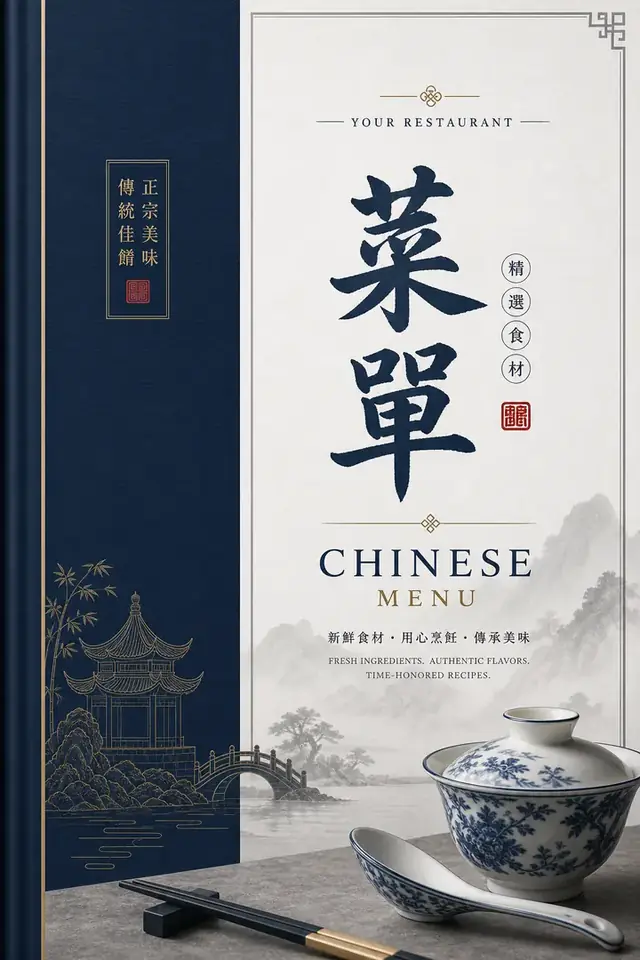
Walk into any Chinese restaurant in India and you will find the same grid hiding inside the menu: chicken, paneer, veg, prawn and mushroom, each cooked chilli, Manchurian, Schezwan, garlic or hot garlic, dry or with gravy. Printed as one long list, that grid becomes eighty lines that guests skim and then order the chilli chicken they always order.
The fix is not fewer dishes. It is a layout that shows the pattern. When guests can see the sauces, the proteins and the portion sizes clearly, they explore more of the menu, share more plates and build a better meal of starter, main and noodles or rice.
What to put on a Chinese menu
Soups first
Hot and sour, Manchow, sweet corn and lemon coriander, each in veg and non-veg. Many tables start every meal here.
Dry starters and gravy mains
Separate dry dishes from gravy ones. Chilli paneer dry and chilli paneer gravy are different orders and should sit in different sections.
Half and Full plates
Most Indo-Chinese dishes are sold in Half and Full. Show both prices and how many people each one serves.
Spice level
Mark Schezwan, hot garlic and chilli dishes with a clear spice note. Families with children look for the mild ones.
Noodles and rice
Hakka noodles, Schezwan noodles, fried rice and triple rice. Say which protein options each comes in.
Momos and dim sum
Steamed, fried and pan-fried, with the filling and piece count. They are often the most-ordered item in the evening.
Chinese menu design ideas
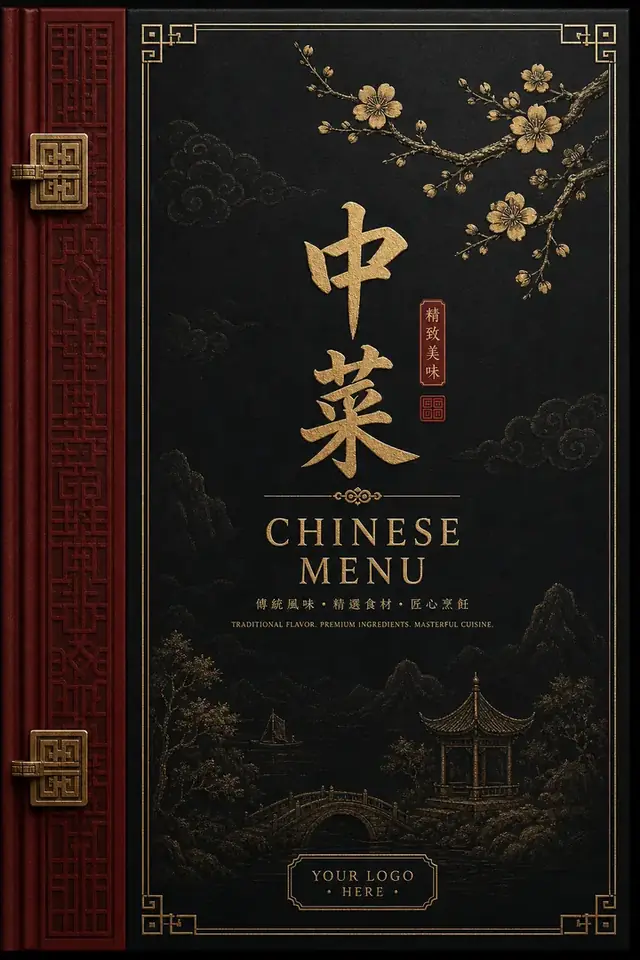
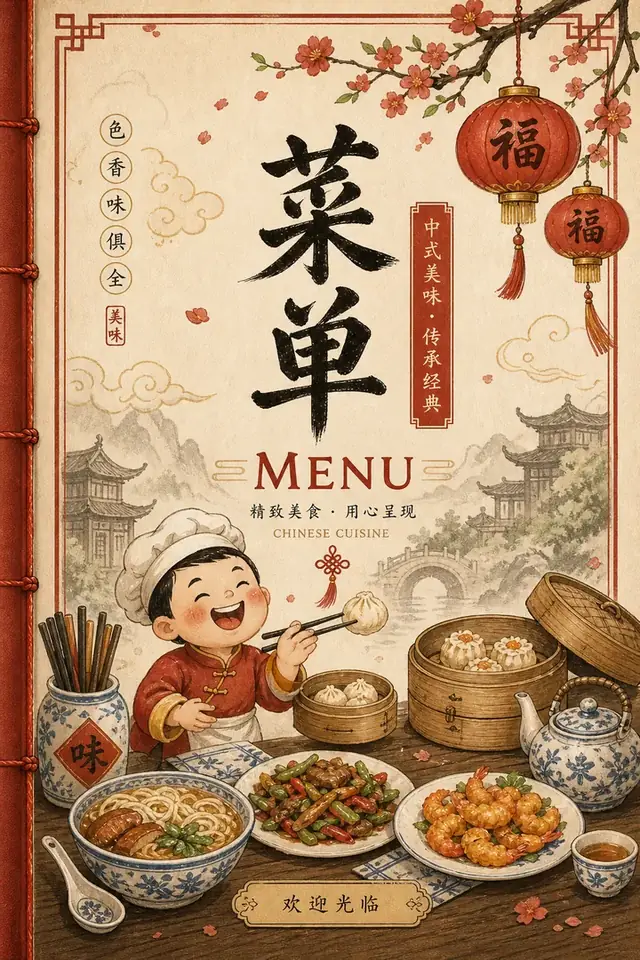
Show sauces as a style list
Instead of repeating every dish for every protein, describe each sauce once and list the proteins with prices beneath it. The menu shrinks and gets clearer.
Suggest a meal for two
A line like For two: one soup, one starter, one gravy and one fried rice helps couples order a balanced meal without guessing.
Use red sparingly
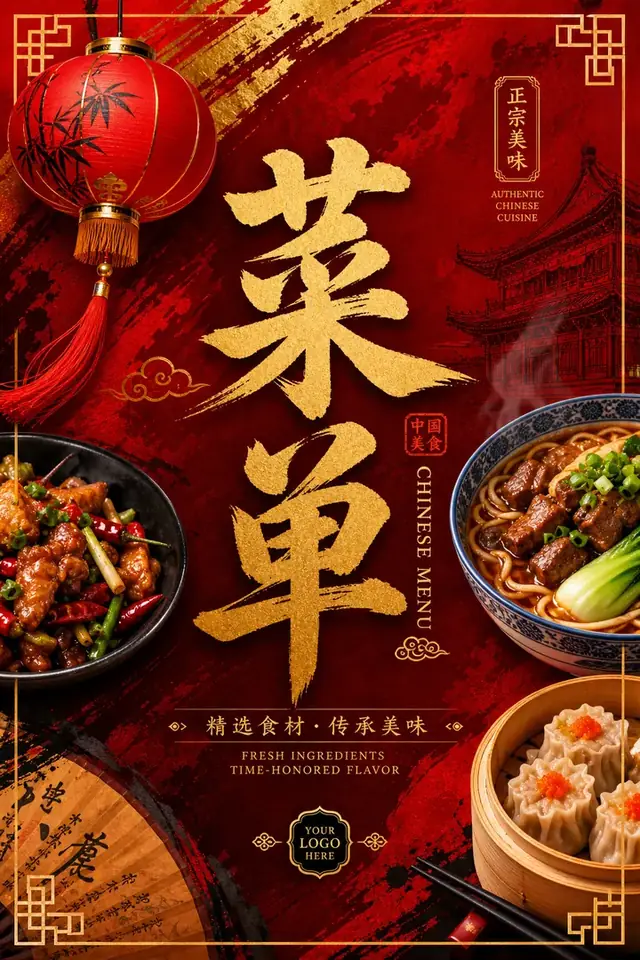
Red and gold say Chinese restaurant at a glance, but large red blocks with white text are tiring. Use red for headings and keep the body light.
Describe the less familiar dishes
Dishes like Kung Pao, Szechuan pepper chicken or a Burmese khow suey need one line on taste and heat. Chilli chicken does not.
Highlight your house special
If your Dragon chicken or Chef's special noodles is what people come back for, give it a photo and a bestseller tag.
Keep veg and non-veg sections parallel
Mirror the same structure for veg and non-veg so families can compare and order for both sides of the table.
- Make dry and gravy clear in the dish name itself, not just the section heading.
- Write the momo piece count for each portion.
- Keep the Half and Full price on every line, including soups if you serve them in two sizes.
- Do not print the same dish five times with only the protein changed if one line with five prices will do.
- Do not assume every guest knows the difference between Manchurian and hot garlic.
- Do not leave seafood on the menu on days you cannot get fresh prawns; mark it out of stock.
Make your Chinese menu on TryTheMenu
TryTheMenu handles the long Indo-Chinese menu well: each dish can carry several sizes and prices, such as Half and Full, with a note on how many it serves, plus veg and non-veg tags and bestseller tags. Guests scan the table QR and order on their own phone, and orders go onto the table's bill. Change a price or mark prawns out of stock in the editor and it shows on your QR menu right away.
You start with 1,000 credits on sign-up for your first 100 bills. Menus, table orders and kitchen tickets use no credits; each closed bill uses 10 credits (₹2 + GST at the base rate).
Sign up with your mobile number
The QR menu and table ordering are on from the start.
Photograph your printed menu
Upload up to 10 photos per import; the AI reads dishes, categories, prices and Half/Full sizes into a draft you check and edit.
Pick a theme
Choose a ready-made theme or your brand colours; Match my logo can take the reds and golds straight from your logo.
Print QR cards
Print cards for every table, and share your menu link on WhatsApp for home-delivery regulars.
More on this: QR menu for your restaurant · Menu from photos · QR code menu · Pricing
Chinese menu design: your questions.
How do I organise a long Indo-Chinese menu?
Start with soups, then dry starters, gravy mains, noodles and rice, and momos. Within each, keep veg and non-veg separate, and show Half and Full prices on every line.
Should I show spice levels?
Yes. A simple mild, medium or hot note beside each dish helps families and first-time guests, and saves staff from answering the same question all evening.
My menu has over 100 dishes. Can I still set it up on TryTheMenu?
Yes. Photograph the printed card, up to 10 photos per import, and the AI turns it into a draft you review. Our onboarding team can also set it up from your photos.
Can I use the QR only as a menu, without table ordering?
Yes. Ordering is on from the start, but we can switch it off on request so the QR works as a menu only.
More design ideas for restaurants and cafés.
Put your menu on a QR code your guests can scan.
Sign up with your mobile number, build your menu or send us photos of your printed card, and print your table QR cards.
Or WhatsApp +91 70016 94537. We answer 24x7.